

There are photographs that sell. There are photographs that win awards. There are photographs that get likes and shares and all the little bits of validation photographers secretly pretend they don’t care about.
And then there are photographs that become part of your story.
This is one of those.
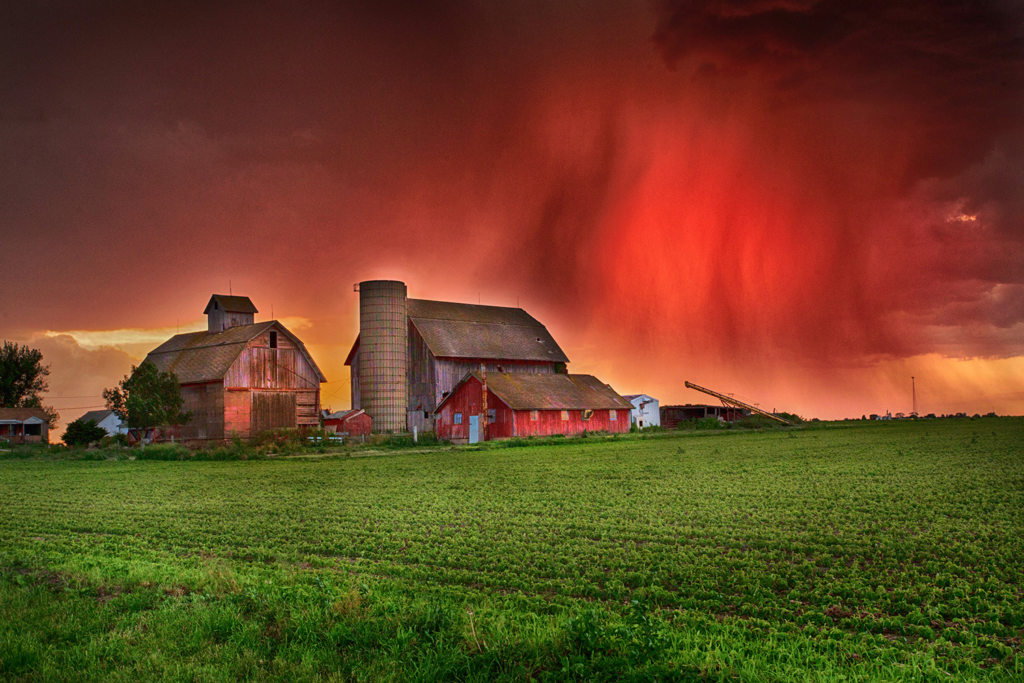
About thirteen years ago, I was living in Yorkville, Illinois. If you’ve never been there, imagine plenty of farmland, open skies, and enough back road, red barns and wildflowers to keep a photographer entertained for years. It was the kind of place where you could leave the house without a destination and still come home with something worth photographing.
On this particular day, my heart was telling me exactly what it always tells me.
“Go take pictures.”
My head, however, had other ideas.
“Nope. Stay home. Storms are coming. And you’re tired and feeling lazy.”
Now, if there’s one thing I’ve learned after decades of carrying a camera around, it’s that my heart and my head rarely agree on photography. My head likes comfort, dry clothes, and common sense. My heart sees dramatic clouds and starts acting like a Labrador who just heard someone say the word “walk.”
The weather forecast wasn’t exactly encouraging. Dark clouds were building, the air felt heavy, and it was obvious a thunderstorm was rolling in. A sensible person would have stayed home. A nap sounded like a great idea.
So, I grabbed my camera.
As I wandered through the countryside, I spotted this beautiful old red barn sitting out in the middle of a field. It was charming, weathered, and perfectly rural. The kind of barn that makes photographers immediately start calculating compositions before they’ve even stopped the car.
Then I looked behind it.
A massive thunderstorm was charging straight toward the farm.
Not drifting.
Not approaching slowly.
Charging.
The sky had turned an angry shade of orange-red, and curtains of rain were pouring from the clouds like something out of a disaster movie. The entire scene looked dramatic, wild, and just a little bit terrifying.
Naturally, I pulled over.
Because apparently self-preservation has never been my strongest photographic skill.
The moment I stepped out of the car, I discovered I wasn’t alone. Millions of gnats had apparently scheduled a convention in that exact location. They swarmed my face, flew into my eyes, bounced off my camera, and generally made it clear that I was not welcome. I was swatting bugs with one hand and shooting photos with the other while trying not to inhale an entire insect colony.
It was ridiculous.
It was uncomfortable.
And it was absolutely worth it.
I snapped frame after frame as the storm moved closer. The light kept changing. The sky grew darker. The rain intensified. Every few seconds the scene looked different than it had moments before.
Then it was over.
The storm arrived.
I retreated.
The gnats probably celebrated.
Years later, out of thousands upon thousands of photographs I’ve taken, this image still stands out in my mind. Not because it’s technically perfect. Not because it’s my most famous photograph. Not because it made me rich (I wish!).
It stands out because I almost didn’t take it.
If I had listened to the practical voice in my head, I would have stayed home and napped. I would have missed the drama, the adventure, the ridiculous gnat attack, and this image that still makes me proud every time I see it.
Photography has taught me this lesson over and over again: some of the best photographs happen just beyond the point where it’s easier to stay home.
Just beyond the forecast.
Just beyond the inconvenience.
Just beyond the little voice that says, “Maybe tomorrow.”
Sometimes the difference between an ordinary day and a memorable photograph is simply deciding to go anyway. In fact, that’s a motto I have with another photographer friend of mine: “You don’t know until you go”. So true!!
And honestly, that’s one of the reasons I created my beginner photography guide. New photographers often think great photography is about owning better gear or memorizing complicated settings. Those things help, of course, but they’re only part of the story.
The bigger challenge is building enough confidence with your camera that when the moment appears—a sunrise, a storm, a fleeting beam of light—you know what to do without panicking over settings.
My Camera Settings Explained guide was created to help beginners get comfortable with aperture, shutter speed, and ISO so they can spend less time guessing and more time saying yes to the photographs that are calling them.
Because sometimes the photograph you’ll remember forever is the one you almost didn’t take.
Click HERE to take a look at my Camera Settings Explained guide on Etsy.