
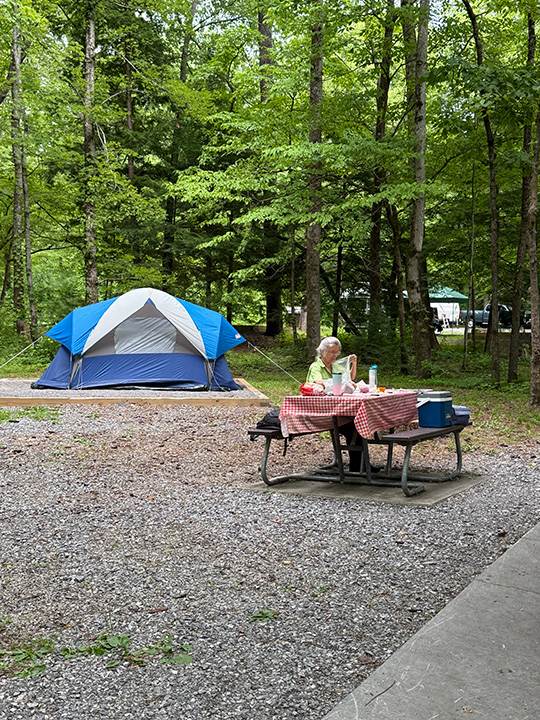
This week I found myself tent camping in Cades Cove Campground in Smoky Mountains National Park with my very dear photographer friend Dolora. Yep, two old ladies setting up and camping in a tent – what a sight! And wouldn’t ya know it – it rained ALL NIGHT LONG. And Dolora failed to inform me that her tent was 20 years old and was no longer waterproof! But that’s a story for another day – suffice it to say WE GOT SOAKED. But we toughed it out all night long in that tent!
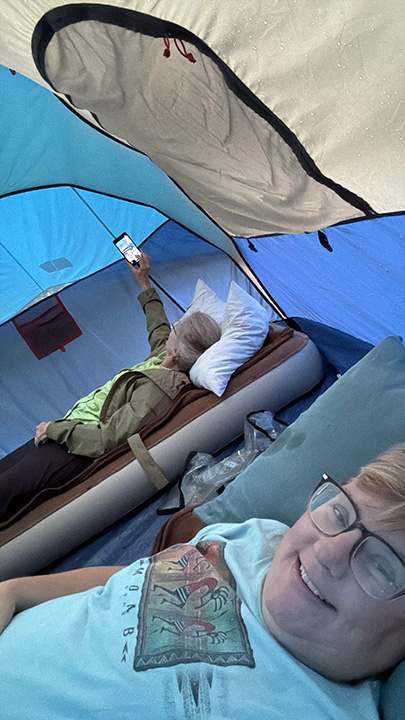
See the water droplets coming down the walls? And on my pillow?
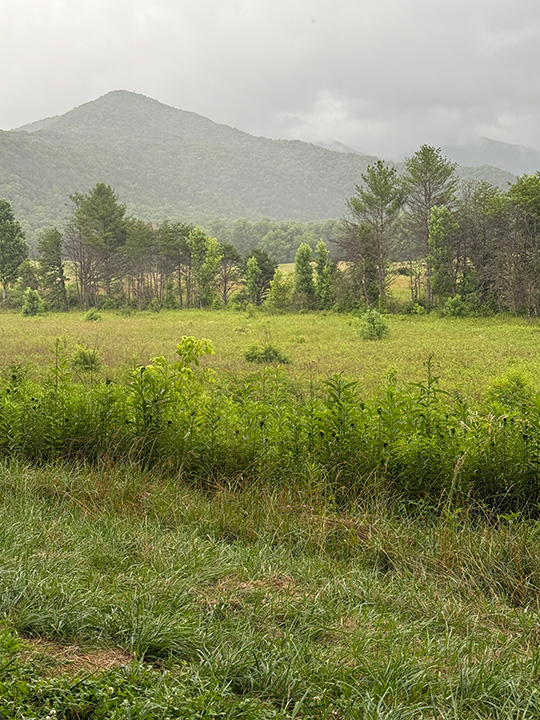
The Smoky Mountains were murky to say the least!
The purpose of our camping trip was to be able to go around the Cades Cove Loop Road over and over and over again, looking for bears and other wildlife. And then once it got dark, we were going to go photograph star trails and The Milky Way. Guess what? – when it’s pouring rain there are no stars to trail! There is no Milky Way! And all the animals go hide in the deep forest where they might stay dry! We had a lot of laughs, but not a lot of photographs! (I’m a poet and I don’t even know it LOL).
One of the biggest struggles new photographers face isn’t camera settings. It’s not aperture, shutter speed, or ISO. It’s not even figuring out what all those mysterious buttons on the camera do. The biggest struggle is often much simpler:
“I don’t know what to photograph.” Yup, been there done that recently!! VERY recently!!
I’ve heard it hundreds of times over the years. A new photographer buys a camera, watches a few YouTube videos, learns a little about the exposure triangle, and then sits staring out the window wondering what to do next. The camera ends up back in the bag. A week later, they feel guilty because they spent good money on something they’re not using.
Sound familiar?
Here’s the good news: becoming a better photographer doesn’t require exotic locations, expensive trips, or dramatic sunsets. Or even rainy nights spent in a leaky tent. What you need is practice. Not random practice. Intentional practice.
So I put together a simple week of beginner photography assignments. These are designed to help you learn to see photographs everywhere around you. No travel required. No special equipment required. No pressure to create masterpieces. Just seven days of learning.
Day 1: Find Three Different Colors
Today’s assignment is simple. Pick three colors and photograph them. Maybe it’s a red flower, a blue coffee mug, and a yellow raincoat hanging in the closet. The goal isn’t to create award-winning images. The goal is to train your eye to notice color.
One thing you’ll discover as a photographer is that ordinary objects become much more interesting when you start paying attention to light, shape, and color. The camera is teaching you to see.
Day 2: Photograph Something You Use Every Day
Choose an everyday object. Your favorite coffee cup. Your reading glasses. A gardening tool. The leash hanging by the door. Now photograph it as if you were creating an advertisement for it.
Move around it. Try different angles. Get close. Get lower. Get higher. Most beginners take one photo and move on. Good photographers explore.
Day 3: Look for Light
Today, ignore the subject. Instead, look for light.
Find sunlight streaming through a window. Watch how evening light falls across your kitchen table. Notice shadows on a wall.
Photographers aren’t really photographing objects. We’re photographing light. The sooner you understand that, the faster your photography will improve.
Day 4: Get Close
Really close.
Most beginners stand too far away from everything. Today, fill the frame. Photograph the texture of tree bark, the petals of a flower, the details on a leaf, or the whiskers on your dog.
You don’t always need a grand landscape to make an interesting photograph. Sometimes the details tell the story.
Day 5: Photograph Something That Makes You Smile
This is my favorite assignment.
Forget the rules for a day. Photograph something that genuinely makes you happy. Maybe it’s your husband working in the garage. Your grandchild playing outside. A sleeping dog. A favorite chair where you drink coffee every morning.
Photography isn’t just about making pretty pictures. It’s about preserving pieces of your life. Years from now, these photographs may matter more than you realize.
Day 6: Tell a Story with Three Photos
Choose a simple activity and photograph it in three steps. Making coffee. Watering flowers. Walking the dog. Baking cookies.
Take a beginning photo, a middle photo, and an ending photo.
Congratulations. You’re now learning visual storytelling. This is one of the skills that separates snapshots from photographs that connect emotionally.
Day 7: Photograph the Same Subject Five Different Ways
Pick one subject. Just one.
Now create five completely different photographs of it. Change your angle. Change your distance. Change your composition. Change your perspective.
You’ll quickly discover that photography is less about the subject and more about how you choose to see it.
The Real Goal
At the end of this week, don’t worry about whether your photographs are good. Seriously. Don’t judge them. Don’t compare them to photographers who have been shooting for twenty years.
The goal isn’t perfection. The goal is practice. The goal is building the habit of picking up your camera. The goal is training your eyes to notice things you’ve walked past a thousand times.
Every photographer starts exactly where you are right now—confused, uncertain, and wondering if they’re doing it right. The photographers who improve aren’t necessarily the most talented. They’re simply the ones who keep showing up.
So grab your camera tomorrow. Start with Day 1.
And remember: the best photograph you’ll ever take is often the one that convinces you to keep going.
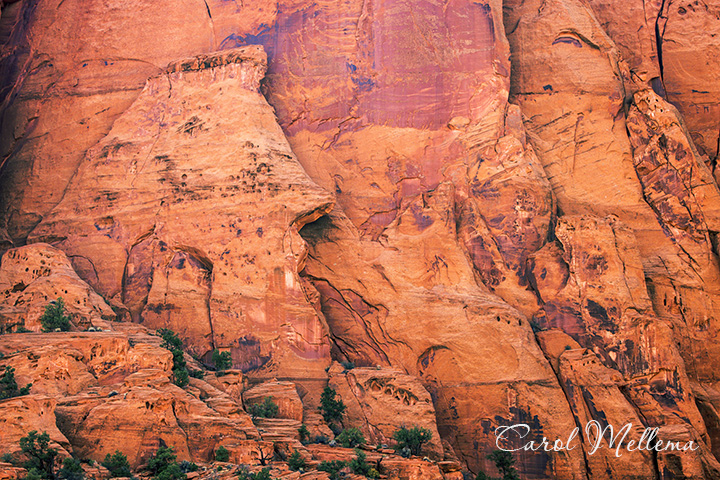
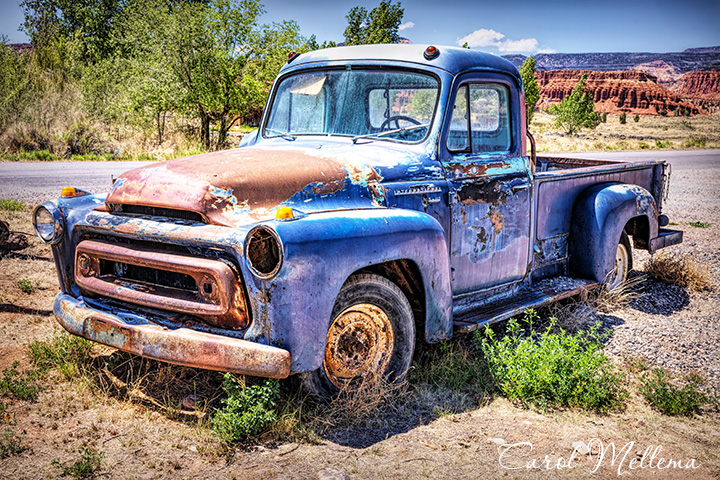
From the same Utah trip, but another day. Teri and I were in the cute town of Torrey, Utah, so we gave ourselves
an assignment to only photograph “Americana” type photos that day. This was one of mine.
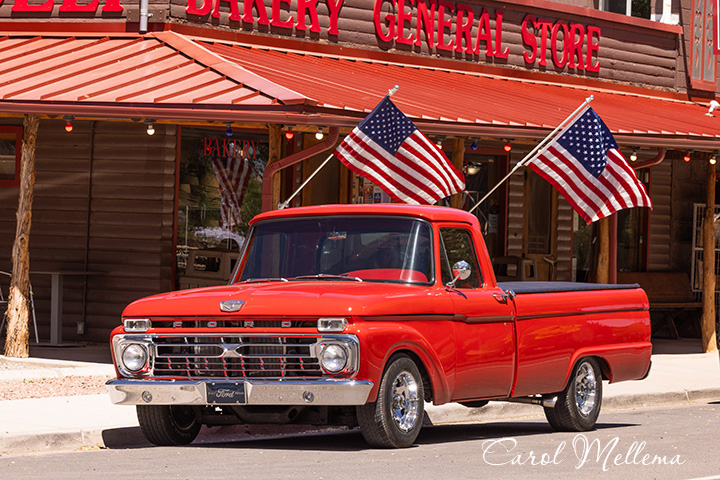
Another image from our “Americana” day. An old red pickup truck, American flags billowing in the breeze,
and the small town General Store in the background. It doesn’t get any more “Americana” than that!
The moral of the story is this: Give yourself assignments! It’s a great way to learn your camera, learn to see compositions and learn to see light.
If you’re confused on where to start and how to use your camera, and what is an f-stop? And what is this aperture thing anyways? I’ve got you covered! I’ve written a handy little e-book all about learning to use your camera. And it comes with a FREE Exposure Triangle Cheat Sheet that you can print out and refer to while you’re out doing your assignments from this blog post!
So go HERE and grab your Photographer’s Cheat Sheet!
HAPPY SHOOTING MY FRIENDS!!!